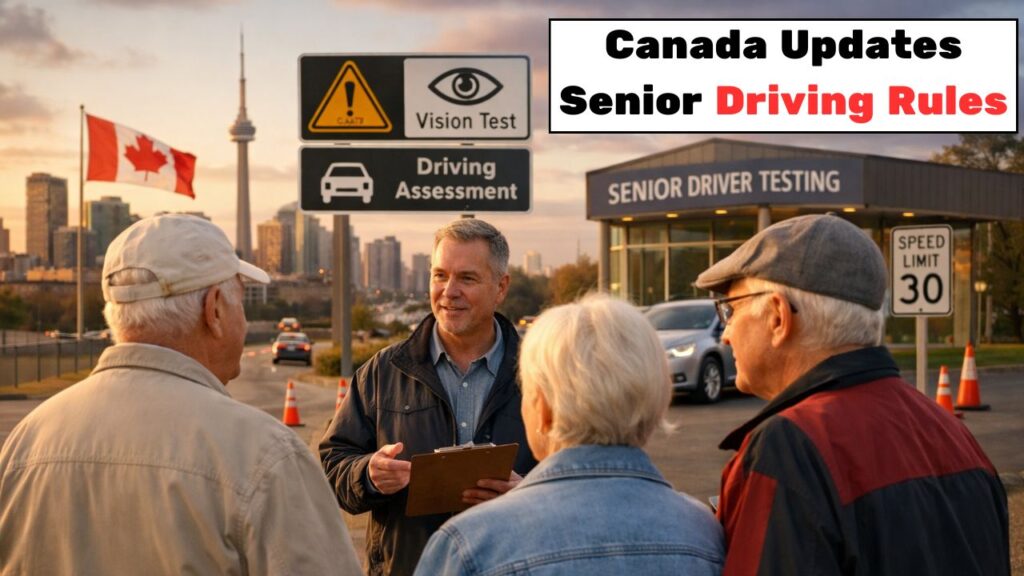
New Senior Driving Rules in Canada – Starting January 2026, Canada is introducing updated senior driving rules that directly affect drivers aged 65 and older. These changes are designed to balance road safety with independence for older adults, reflecting Canada’s aging population and evolving transportation needs. The new measures focus on medical fitness, licence renewals, and regular assessments rather than age alone. Canadian authorities emphasize that most seniors remain capable drivers, but periodic checks can help identify risks early. For drivers aged 65 plus, understanding these rules is essential to avoid penalties, maintain legal driving status, and continue driving safely across the country.
New Senior Driving Rules in Canada for Drivers Aged 65 and Older
The new senior driving rules in Canada introduce a more structured renewal process for drivers aged 65 and above. Under the updated approach, older drivers may be required to complete more frequent licence renewals, depending on their province or territory. These renewals often include vision tests, medical self-declarations, or doctor assessments to ensure fitness to drive. Canadian seniors are not being removed from the road based on age alone; instead, the system focuses on health and ability. Authorities believe this approach supports safer roads while respecting the independence of older individuals who rely on personal vehicles for daily activities.

Canada Driving Licence Changes 2026 Affecting Older Canadian Drivers
Canada’s driving licence changes in 2026 place stronger emphasis on medical transparency and awareness for older Canadian drivers. Drivers aged 65 plus may be asked to report certain medical conditions, medications, or vision changes that could impact driving safety. In some regions, written knowledge refreshers or educational material may also be included during renewal. These measures aim to reduce accident risks without forcing seniors off the road unnecessarily. Across Canadian provinces, transport departments stress that the goal is prevention and early intervention, helping older drivers adapt to changes in reflexes, eyesight, or health while remaining mobile.

| Age Group | Licence Renewal Frequency | Medical Check Requirement |
|---|---|---|
| Under 65 | Every 5 years | Not routinely required |
| 65–74 | Every 3–5 years | Medical self-declaration |
| 75–79 | Every 2–3 years | Doctor’s assessment |
| 80+ | Every 1–2 years | Medical and vision tests |
Driving Rules Update for Senior Citizens Across Canadian Provinces
The driving rules update for senior citizens across Canadian provinces allows flexibility while following a national safety direction. Each province and territory can adjust testing frequency, renewal timelines, and medical review standards based on local road conditions and demographics. For example, rural regions may prioritize continued access to driving, while urban areas may focus more on congestion and accident prevention. Canadian senior citizens are encouraged to check their provincial transport authority for exact requirements. Overall, the updates aim to create consistency in safety expectations while recognizing regional differences and the diverse needs of older drivers nationwide.
How Older Drivers in Canada Can Prepare for 2026 Driving Rule Changes
Older drivers in Canada can prepare for the 2026 driving rule changes by staying proactive about their health and driving skills. Regular eye exams, honest discussions with healthcare providers, and refresher driving courses can make renewals smoother. Many Canadian organizations offer voluntary senior driver programs that help individuals adapt to new traffic laws and modern vehicle technology. Keeping medical documents updated and understanding provincial renewal notices can also prevent last-minute issues. Preparation ensures that older drivers continue driving legally, confidently, and safely while meeting the expectations set by Canada’s updated road safety policies.
Frequently Asked Questions (FAQs)

1. Do all Canadian drivers over 65 need a medical test in 2026?
No, requirements vary by province, and some drivers may only need a self-declaration or vision test.
2. Will senior drivers in Canada lose their licences automatically at a certain age?
No, licences are based on fitness to drive, not age alone.
3. Are the new senior driving rules the same across all of Canada?
No, provinces and territories set specific rules within national safety guidelines.
4. When do the new Canadian senior driving rules take effect?
The updated rules begin rolling out from January 2026.
 Major Canada Benefit and Pension Changes Take Effect on 13 January 2026 With Billions in Support