Canada is stepping into a new era of road safety as AI-powered traffic enforcement begins nationwide from 20 January 2026. Drivers will now face $1,500 fines for speeding violations captured by advanced automated cameras, replacing outdated manual systems. The government aims to reduce accidents and improve road compliance by leveraging technology that detects dangerous driving in real time. Motorists are encouraged to familiarize themselves with these changes to avoid hefty penalties and ensure safer streets across urban and rural areas.
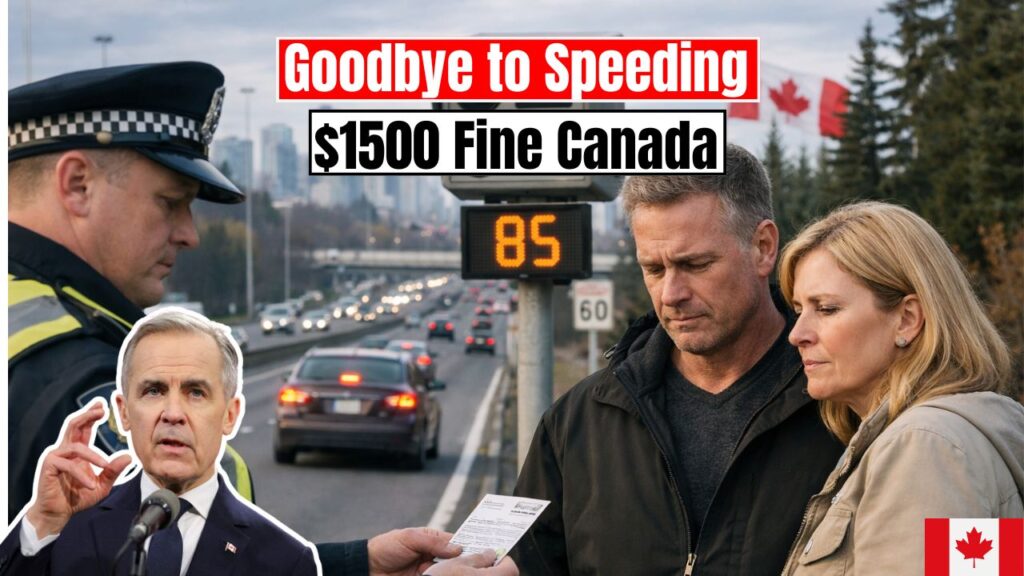
Canada’s AI Speed Camera Rules
Under the new AI speed monitoring program, cameras are strategically placed across high-risk zones to capture speeding violations accurately. Each device is connected to a central real-time reporting system that flags offences within minutes, ensuring immediate accountability. Unlike previous methods, the AI system can differentiate between vehicles, detect speeding patterns, and generate automated fines without human delay. Drivers are advised to stay within posted speed limits to avoid penalties and contribute to road safety improvements.
 Goodbye to Paper Driving Licences in Canada as $250 Digital Licence Rule Starts From 20 January 2026
Understanding $1,500 AI Fines in Canada
The new $1,500 AI fines apply to all speeding offences exceeding threshold limits set for urban and highway areas. First-time violators can expect automatic notifications sent directly to their registered address, while repeat offenders may face escalated penalties. This system eliminates manual ticket delays and ensures consistent fine enforcement. Authorities stress that these fines are not arbitrary; they are calibrated to deter dangerous driving and protect vulnerable road users such as pedestrians and cyclists.

Impact of AI Traffic Cameras on Drivers
AI traffic cameras are expected to change driving behavior significantly by promoting law-abiding habits and reducing accident risks. Studies suggest that automated detection improves compliance rates and decreases high-speed collisions. Motorists may notice faster response times from authorities and enhanced traffic monitoring in critical zones. Overall, this system aims to create safer roads while maintaining fairness, transparency, and accountability in speed enforcement nationwide.
Summary and Analysis
The introduction of AI speed cameras in Canada signals a major shift towards technology-driven law enforcement. By combining real-time detection, automated fines, and precise monitoring, authorities aim to lower accident rates and improve overall traffic management. Drivers should treat this as an opportunity to adopt responsible habits and stay informed on new regulations. As cities expand and traffic grows, AI traffic systems will play an increasingly vital role in keeping Canadian roads safe for everyone.
| Speed Zone | Fine Amount | First-Time Offence | Repeat Offence |
|---|---|---|---|
| Urban Areas | $1,500 | Immediate Notice | Increased Fine + Points |
| Highways | $1,500 | Immediate Notice | License Suspension Risk |
| School Zones | $1,500 | Immediate Notice | Higher Penalty + Community Service |
| Construction Zones | $1,500 | Immediate Notice | Escalated Fine + Safety Course |
Frequently Asked Questions (FAQs)
1. When do AI speed camera fines start?
Fines take effect across Canada from 20 January 2026.
 Goodbye to Early Retirement Penalties as New Flexible Pension Rule Takes Effect From 15 January 2026
2. How much is the fine for speeding?
Each violation captured by AI cameras carries a $1,500 fine.
3. Are repeat offenders treated differently?
Yes, repeat violations may lead to higher fines or license suspension.
4. Where are AI cameras installed?
Cameras are placed in urban, highway, school, and construction zones.