Goodbye to Easy Licence Renewals – From January 2026, Canada is making a decisive shift in how senior drivers renew their licences, marking the end of automatic and hassle-free renewals many older motorists were used to. The updated rules introduce stricter checks aimed at improving road safety as the population ages. Canadian authorities say these changes are designed to balance independence with public safety, ensuring drivers remain medically and cognitively fit. For seniors across the country, this means preparing for new assessments, possible tests, and clearer renewal conditions that begin nationwide on 10 January 2026.
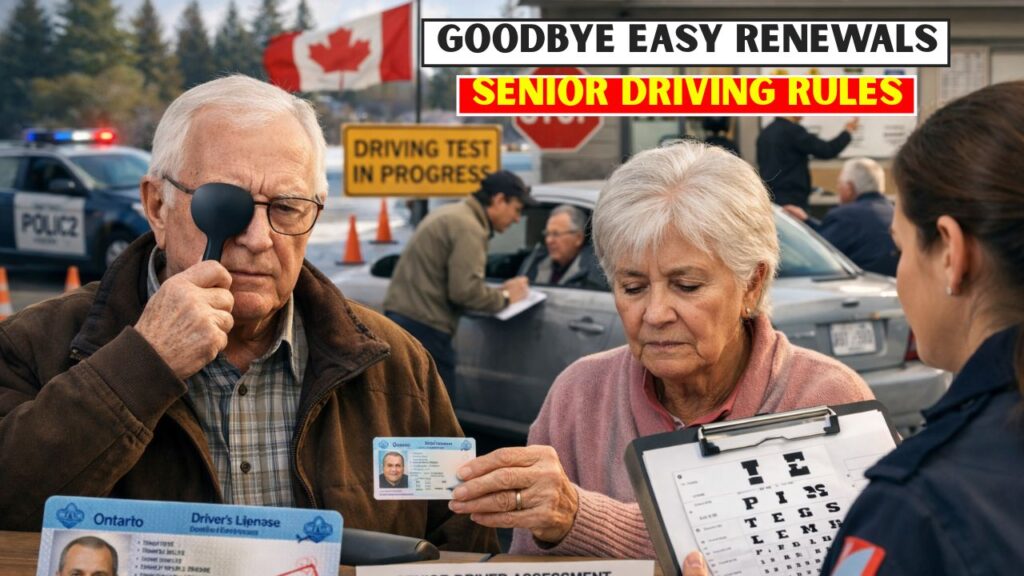
Stricter Senior Driving Rules Affecting Canadian Seniors
The new senior driving rules in Canada are focused on ensuring that older motorists can continue to drive safely without unnecessary risk to themselves or others. Canadian seniors renewing their licences from January 2026 may face mandatory vision checks, medical questionnaires, and in some provinces, cognitive screening. These steps are meant to identify age-related conditions early rather than remove licences automatically. Federal and provincial transport agencies emphasize that the goal is not to punish older drivers, but to support safer mobility. However, seniors who previously renewed by mail or online may now need in-person assessments, depending on age thresholds set by their province.

Licence Renewal Changes for Older Drivers Across Canada
Across Canada, licence renewal processes for older drivers will no longer follow a one-size-fits-all approach. Provincial governments are aligning their rules with updated safety data, meaning renewal requirements may vary slightly but follow the same stricter principles. Older drivers in Canada could be asked to provide medical clearance from a physician, complete updated eyesight tests, or attend a review session. These measures reflect growing concerns about reaction times and medical conditions that increase with age. While many seniors will pass easily, those with flagged issues may receive restricted licences rather than outright suspensions.

| Requirement | Applies To | Details |
|---|---|---|
| Vision Test | Seniors 70+ | Mandatory eyesight screening at renewal |
| Medical Questionnaire | Older licence holders | Health conditions disclosure required |
| Cognitive Screening | Selected cases | Only if risk indicators are present |
| Renewal Frequency | Senior drivers | Shorter renewal periods than standard licences |
How New Driving Assessments Impact Canada’s Older Motorists
For Canada’s older motorists, the introduction of stricter driving assessments may feel like a loss of independence, but officials stress it is about prevention, not punishment. Many seniors will notice little change beyond extra paperwork or an in-person visit. Those who show mild limitations could be offered restricted driving privileges, such as daytime-only driving. This approach allows older drivers to remain mobile while reducing accident risk. Transportation departments across the country encourage seniors to prepare early, keep medical records updated, and understand provincial rules to avoid delays once the new system begins.
Why Canada Is Tightening Rules for Senior Drivers
The Canadian government and provincial authorities point to rising accident data involving older age groups as a key reason for tightening senior driving rules. As life expectancy increases, more Canadians are driving well into their seventies and eighties. While many are safe drivers, age-related health changes can affect driving ability. By introducing structured assessments, Canada aims to reduce serious accidents without forcing seniors off the road unnecessarily. Officials also note that clearer rules create fairness and consistency, helping families and healthcare providers support older drivers before problems escalate.
Frequently Asked Questions (FAQs)

1. When do the new senior driving rules start in Canada?
The stricter licence renewal rules take effect nationwide from 10 January 2026.
2. Will all seniors need to take a driving test?
No, most seniors will only need vision or medical checks unless specific concerns are identified.
3. Do these rules apply the same way in every province?
All provinces follow the stricter framework, but exact age thresholds and steps may vary.
4. Can seniors still drive if they have minor health issues?
Yes, many may receive restricted licences rather than losing driving privileges entirely.