Canada Penalty Rule – Canada is tightening its road safety and vehicle compliance rules with a major update coming into force on 10 January 2026. Under the new regulation, drivers who fail to keep their vehicle records, digital updates, or mandatory compliance systems current could face penalties of up to $2,500. The move is aimed at reducing outdated registrations, uninsured driving, and unreported vehicle changes across the country. For everyday motorists, this marks a clear shift toward stricter enforcement, digital tracking, and greater accountability on Canadian roads.
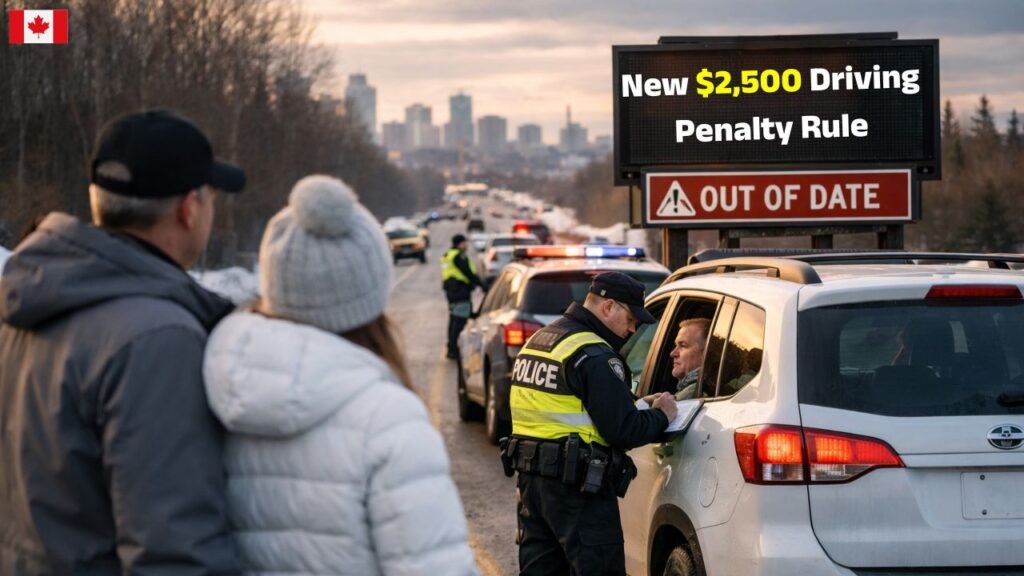
$2,500 Driving Update Penalty Across Canada Explained
The new $2,500 penalty rule across Canada targets drivers who continue operating vehicles without completing required updates. These updates may include licence renewals, address changes, vehicle ownership transfers, insurance status updates, or compliance with new digital driving systems. Canadian authorities have emphasized that outdated records make enforcement difficult and increase risks on public roads. By introducing a high financial penalty, the government is pushing motorists to stay current with all legal requirements. This change affects private car owners, commercial drivers, and even occasional vehicle users. The rule is not limited to highways; it applies on city roads, rural routes, and provincial networks, making nationwide compliance essential.

New Driver Compliance Rules for Canadian Motorists in 2026
For Canadian motorists, 2026 brings a stronger focus on accountability and real-time compliance. The updated rule means that simply holding a valid licence is no longer enough if related records are outdated. Drivers must ensure their vehicle registration, insurance documentation, and digital driving records are accurate and current. Authorities may use roadside checks, automated systems, and digital databases to identify non-compliance. This approach reflects Canada’s broader move toward smart enforcement and data-driven road safety. Motorists who ignore update reminders or delay renewals risk facing the full $2,500 penalty, even if no other traffic offence has occurred.

| Rule Element | Updated Requirement |
|---|---|
| Penalty Amount | Up to $2,500 fine |
| Effective Date | 10 January 2026 |
| Affected Drivers | Private and commercial drivers |
| Common Violations | Outdated licence, registration, insurance |
Why the Canadian Government Is Ending Driving Without Updates
The Canadian government views outdated driving records as a growing safety and enforcement problem. Vehicles with old registrations or incorrect information can complicate accident investigations, insurance claims, and law enforcement actions. By enforcing a strict penalty, authorities aim to improve road safety, reduce administrative backlogs, and ensure accurate national driving databases. The rule also aligns with Canada’s push toward digital governance, where real-time data plays a key role in public safety. For drivers, this means fewer loopholes and a clearer responsibility to stay compliant at all times.
How Drivers Across Canada Can Avoid the $2,500 Fine
Drivers across Canada can avoid the new penalty by staying proactive rather than reactive. Regularly checking licence expiry dates, updating addresses after moving, renewing insurance on time, and completing vehicle transfers promptly are essential steps. Many provinces now offer online portals and reminders, making compliance easier than ever. Keeping digital and physical documents aligned reduces the risk of unexpected fines during roadside checks. With enforcement starting in January 2026, motorists who build good compliance habits now will be better protected from costly penalties later.
Frequently Asked Questions (FAQs)

1. When does the $2,500 driving update penalty start in Canada?
The rule comes into effect nationwide on 10 January 2026.
2. What counts as “driving without updates”?
It includes expired licences, outdated registrations, invalid insurance records, or missing required updates.
3. Does this rule apply in all Canadian provinces?
Yes, the penalty applies across Canada, including provinces and territories.
4. Can drivers avoid the fine if they update records later?
No, penalties apply at the time of enforcement if records are not up to date.