Starting January 2026, Canada is preparing to enforce updated driving rules that aim to improve road safety and reduce serious traffic violations. These changes come as accident rates, distracted driving cases, and speeding incidents continue to concern authorities nationwide. One of the most talked-about updates is the increase in fines, with penalties reaching up to $2,000 for specific offences. The new regulations are designed to encourage responsible driving habits while making roads safer for everyone. Canadian motorists are advised to understand these changes early to avoid heavy fines and unexpected legal trouble.
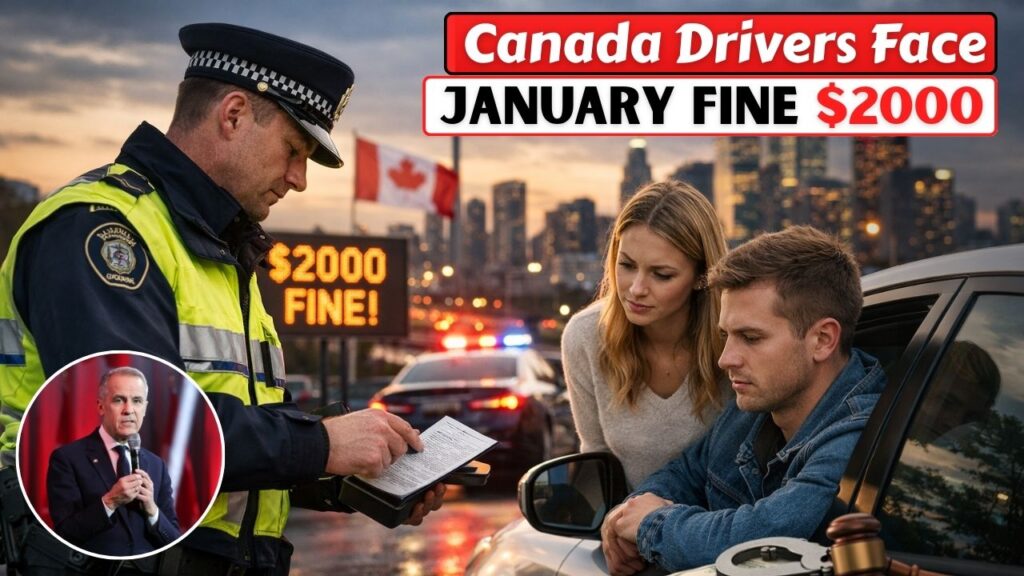
New Canada Driving Rules 2026 Impacting Canadian Drivers
The new Canada driving rules coming into effect in 2026 focus heavily on stricter enforcement and higher penalties for repeat and high-risk offences. For Canadian drivers, violations such as excessive speeding, distracted driving, and reckless behavior may now attract fines that can go as high as $2,000. Authorities believe higher penalties will act as a strong deterrent and reduce preventable accidents. Across Canada, provincial traffic departments are aligning their enforcement strategies with federal safety goals. Motorists may also face additional consequences like licence demerit points or temporary suspensions, making compliance even more important for everyday drivers.

January 2026 Traffic Law Changes for Motorists Across Canada
From January 2026, motorists across Canada will see clearer and tougher traffic laws targeting dangerous driving habits. The revised rules emphasize accountability, especially for drivers who repeatedly ignore road safety standards. Canadian traffic officials are focusing on behaviors that statistically cause the most harm, including speeding in school zones, using mobile phones while driving, and impaired driving. While not all offences will carry the maximum fine, serious breaches could now result in penalties approaching $2,000. These updates signal a strong message that safety on Canadian roads is a shared responsibility.

| Violation Type | Previous Fine | New Fine (2026) |
|---|---|---|
| Distracted Driving | $300–$1,000 | Up to $2,000 |
| Excessive Speeding | $400–$1,500 | Up to $2,000 |
| Reckless Driving | $500–$2,000 | Up to $2,000 |
| School Zone Violations | $350–$1,200 | Up to $2,000 |
Updated Traffic Fines 2026 Affecting Drivers in Canadian Provinces
Drivers in Canadian provinces should be aware that while traffic laws are federally guided, enforcement and exact penalties may vary by province. However, the overall direction remains consistent nationwide: stricter rules and heavier fines. Provincial governments are updating their traffic codes to align with the 2026 changes, especially for offences that endanger public safety. Canadian residents should expect increased monitoring through road patrols and automated enforcement systems. Understanding local provincial rules will be crucial, as repeat offenders may face escalating penalties beyond fines, including court appearances or licence suspensions.
Why Canada Is Raising Driving Fines to $2,000 in 2026
Canada’s decision to raise driving fines in 2026 is rooted in long-term road safety data and public policy goals. Studies consistently show that higher penalties can reduce risky behavior when paired with consistent enforcement. Canadian road safety agencies aim to lower accident-related injuries and fatalities by discouraging dangerous driving habits early. The increased fines also reflect rising enforcement and healthcare costs linked to traffic accidents. For drivers, this change serves as a reminder that responsible driving is not only a legal requirement but also a civic duty across Canada.
Frequently Asked Questions (FAQs)
 Goodbye to Old TFSA Limits as CRA Announces New 2026 Contribution Cap Up to $7,500 From 20 January
1. When do the new Canada driving rules start?
The updated driving rules are expected to take effect from January 2026.
2. Will all traffic offences carry a $2,000 fine?
No, only serious or high-risk violations may attract fines of up to $2,000.
3. Do these rules apply in every Canadian province?
Yes, but exact enforcement and fine ranges may vary by province.
4. Can drivers face penalties other than fines?
Yes, penalties may also include demerit points, licence suspension, or court action.